




















1. Introduction
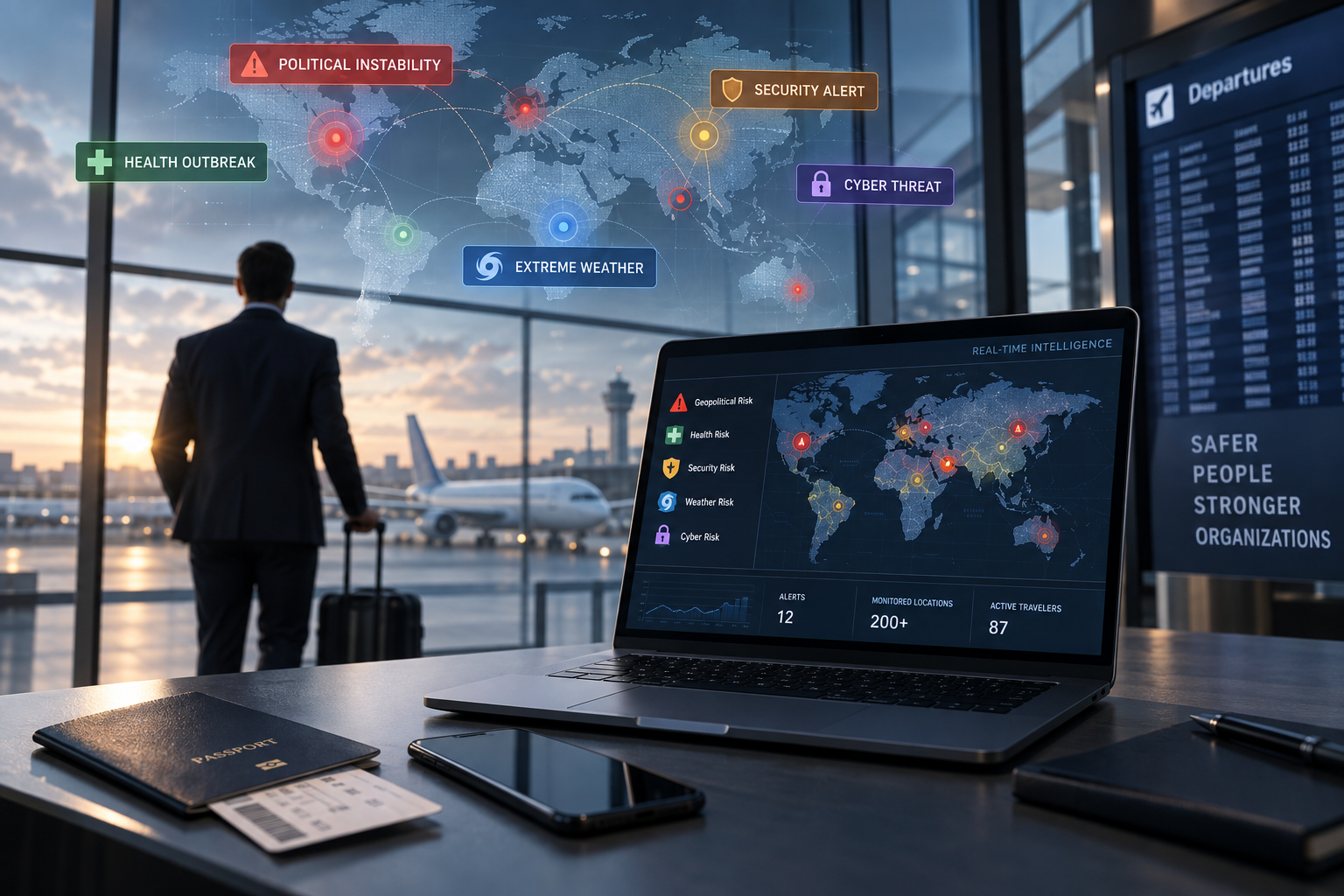
This article offers an analytical examination of the Tripoli context in light of recent tensions, with particular attention to risk management and the role of strategic precognition, understood as the ability to anticipate adverse scenarios through intelligence and OSINT analysis.
1.1 Historical Background and Structural Context
Tripoli is embedded in a long Mediterranean history in which powers, trade routes, and regional rivalries have shaped its identity and strategic function. From a Phoenician city and later a Roman centre of Tripolitania, it became over time a hub between the Mediterranean and the North Sahara.
Since the fall of Gaddafi in 2011, the Libyan capital has become the centre of national tensions: the collapse of central authority and the proliferation of local and tribal militias have transformed Tripoli into a fragmented mosaic of zones of influence. Shifting alliances, weakened institutions, and interference by external actors — Turkey, the UAE, Egypt, European and Atlantic powers — have turned the city into an extremely unstable and high-risk strategic environment.
Today, the confrontation between the Tripoli-based Government of National Unity (GNU) and the Government of Stability (GNS), supported by Haftar, fuels ongoing competition for political legitimacy and territorial control. Meanwhile, armed militias influence security, the economy, and urban governance.
Controlling the capital grants access to critical infrastructure and state resources, but remains precarious and vulnerable to rapid escalation. In this scenario, “risk precognition” becomes essential: continuous and structured analysis — as conducted by Kriptia analysts up to September 2025 — enables the anticipation of crisis indicators in a complex and fragmented environment.
2. 2025: The Critical Year
The Libyan crisis shows a constant and acute trajectory, fuelled by clashes between militias affiliated with the GNU and rival forces (SDF), as well as competition for strategic infrastructures such as Mitiga Airport. In such contexts, risk analysis requires the precise identification of critical areas, since interventions or internal shifts may trigger escalation.
According to various think tanks, Dbeibah’s attempt to consolidate territorial control without security reform risks amplifying latent tensions; ISPI highlights how a “zero-sum” approach to security can have destabilising effects. Also relevant is the confidential meeting held on 3 September 2025 in Rome between Saddam Haftar and Ibrahim Dbeibah, indicative of possible political rebalancing.
At the same time, international interest in Libya’s oil sector continues to grow, yet ports, pipelines, and energy infrastructures remain high-risk areas, exposed to sabotage and instability.
2.1 The New Crises of May 2025
The most critical moment of 2025 in Tripoli occurred between 12 and 19 May, with the sequence of events known as the “2025 Tripoli clashes”. The assassination of commander Abdel Ghani al-Kikli triggered a critical escalation between the 444th Infantry Brigade, controlled by the GNU, and the Stability Support Apparatus (SSA), with the involvement of RADA/SDF forces.
The dynamics reflect classic elements of urban conflict in a hybrid environment:
- concentric fighting;
- involvement of densely populated neighbourhoods;
- clashes over access to prison facilities;
- movements of external militias;
- flight suspensions;
- civil protests and unrest.
A ceasefire was reached on 14 May, followed by the creation, on 19 May, of a “truce commission” under the auspices of the Presidential Council and the UN mission.
However, the fighting resulted in 8 civilian deaths, dozens injured, dozens of detainees released, and a widespread increase in distrust toward Tripoli’s governance. Equally relevant is that the event sparked protests against Dbeibah’s government, with calls for his resignation. The conflict clearly showed—through evidence-based analysis—that the capital is not immune to inter-militia clashes and remains shaken and weak in managing its hinterland.
2.2 Subsequent Developments and Persistent Vulnerabilities
After May 2025, the truce barely survived. Recently, an agreement endorsed by Turkey but not yet signed stipulated that RADA evacuate the civilian area of Mitiga Airport, while lighter units would maintain a presence there. However, the absence of RADA patrols in the city triggered an increase in common crime, a predictable outcome in situations of weak central authority and disorder. Moreover, the agreement exposed intense and widespread issues, highlighting structural fragility and fertile ground for further risks and crises.
3. Timeline of 2025 Events
| Date / Period | Event | Main Actors | Impacts / Relevant Risks |
|---|---|---|---|
| 12 May 2025 | Assassination of commander Abdel Ghani al-Kikli (“Gheniwa”) | SSA vs 444th Brigade | Start of urban clashes and destabilisation of balances |
| 13–14 May 2025 | Escalation of clashes in various Tripoli districts | Rival militias; Abu Salim, Salah Eddin areas | High civilian risk, damaged infrastructure, flight suspensions |
| 14 May 2025 | Ceasefire announcement | GNU, UNSMIL | Attempt at de-escalation; residual tensions persist |
| 19 May 2025 | Creation of “truce commission” | UNSMIL, Presidential Council | Monitoring and containment of conflict |
| 12 Nov 2025 | Shipwreck with at least 42 missing | Migratory flows, IOM | Humanitarian and reputational risk |
| 5–13 Nov 2025 | Arrest of General Osama Almasri Najim | Libyan forces, ICC | Judicial and political implications |
4. Risk Precognition and Intelligence/OSINT Tools
In international risk management, a distinction must be made between perceived risk, risk management, and strategic risk precognition.
- Perceived risk is the current assessment of an unstable situation, diagnosing facts, causes, and consequences in a strategic context.
- Risk management encompasses operational tools and checklists to mitigate, respond to, or counter risks across a broad spectrum of events and applications.
- Strategic risk precognition, finally, is the ability to anticipate hostile scenarios through method, identify thresholds and critical areas, and thus deploy preventive countermeasures.
Precognition relies on integrating HUMINT and OSINT analyses, cross-checked with accessible satellite imagery and a wide range of open sources.
In the Libyan context, OSINT has played—and continues to play—a crucial role, through a multiplicity of sources and actors, making the source pool even broader, along with the use of strategic reports and the monitoring of migration flows.
An operational model of precognition, based on these reflections, can be structured into four methodological phases:
- Systematic monitoring: continuous collection of weak signals, militia movements, internal communications, changes in command, political announcements, social media trends, local publications; infrastructure monitoring through satellite imagery (e.g., Mitiga airport, the port, energy and water nodes).
- Comparative analysis and scaling models: comparison with past scenarios and activation thresholds such as new unrest, assaults, fires, escalations. Contemporary analysis must dialogue with long- and short-term approaches—essential in predictive intelligence.
- Early warning and operational thresholds: definition of critical thresholds and “triggers” that, when surpassed, activate medium-high or high alert phases; structured communication via briefings and timely operational dialogue for institutional actors, diplomats, humanitarian operators, and private entities.
- Mitigative response mechanisms: preventive stages including mediation, redeployment of neutral forces, local negotiation, de-escalation of crises; reactive phases including evacuation protocols, protection of critical facilities, repatriation, emergency communications, and operational continuity planning.
Crucially, Tripoli’s multilayered complexity of local and international actors makes it essential for the precognition model to include continuous feedback loops. Each new development must trigger dynamic adjustments to the model itself.
In the case of May 2025, a precognition model should have monitored tension signals. The growing friction between Dbeibah and Kikli, manoeuvres by the 444th Brigade, and escalating internal conflicts were clearly increasing red flags—not without predictive indicators.
Precognition, however, is not a science but a strategy. Institutional failures, delays in decision-making chains, hostility from uncontrollable actors, and operational limits can undermine predictive capabilities. In environments where alliances shift rapidly, weak signals may be ignored or misinterpreted. Moreover, a strong preventive military presence may be seen as a provocation and trigger adverse reactions.
5. Risk Analysis and Operational Recommendations
Some essential pre-alert indicators must be evaluated and monitored:
- Mobilisation of military convoys inside Tripoli or toward urban outskirts;
- Official statements announcing changes in militia command structures;
- Frequent social media reports of armed movements or tensions in neighbourhoods;
- Airport or port closures and suspensions;
- Sudden civil protests in major urban nodes;
- Incidents involving maritime migratory flows;
- Reports of arrests or proceedings for various crimes, especially human rights violations.
6. Conclusion: Tripoli as a Laboratory of “Anticipated Risk”
Today, Tripoli is a paradigmatic case—worthy of this in-depth analysis—of states or capitals in wartime conditions. Armed conflicts, political and economic destabilisation, and legitimacy crises are both triggered and exacerbated by tensions, fragile equilibrium, and ongoing clashes. The tensions that erupted in May 2025 illustrate how quickly a spark—such as the assassination of a military commander—can evolve into widespread urban conflict, a dynamic well documented in historical and geopolitical literature.
In this context, the concept of risk precognition goes far beyond common rhetoric. It becomes a vital tool for international actors, diplomats, NGOs, and economic and investment operators working in high-risk environments. The ability, within the methodological and practical limits discussed, to anticipate, measure, define critical thresholds, and predict countermeasures is one of the few lines of defence against unpredictability. The concept of unpredictability is crucial and cannot be understood without compressing the long-term historical perspective, the actors involved, and the existing context and motivations.
Tripoli is a significant case study because it reflects these analyzable factors, yet also — through its chameleon-like unpredictability — reveals the limits of such analyses.
https://www.osmed.it/2025/05/30/libia-caos-scontri-e-parate-militari/
https://www.esteri.it/wp-content/uploads/2023/06/Libia_una-crisi-pluridimensionale.pdf
https://documenti.camera.it/leg18/dossier/pdf/ES0224.pdf?_1664729377156
Massimiliano Spiga, Ph.D., is an Intelligence Analyst at Kriptia. He also serves as Director of the Scientific and Cultural Committee and Coordinator of the Observatory on Corporate Crime for Kriptia International. His interests, in Kriptia’s cultural and scientific perspective, concern the balance between historical analysis and contemporary geopolitical and strategic reflections, with additional focus on information analysis and its management within corporate security dynamics. He is currently also researching the relationship between businesses and criminality.