
















Would you entrust your health or the lives of your employees travelling on business solely to Google or Google Maps?
A 56-year-old tourist from Lombardy visiting Comacchio died on Sunday 27 July after going to a healthcare facility found online as an emergency room, having experienced chest pains, but whichhad not actually offered that service for 10 years.
Emergency situations cannot be left to chance or unreliable information, but must be planned for in order to avoid risky and improvised solutions.
The news received significant media coverage and naturally served as a reminder for the localhealth authority about the best practices to follow in the event of time-sensitive conditions such ascardiac arrest, and therefore the absolute importance of calling 118 and the ambulance service. Operators arriving at the scene in ambulances can at least stabilise the situation and monitor itduring emergency transport to a fully equipped hospital, without wasting potentially fatal time.
This news story serves as a powerful example for those involved in travel safety and highlights the vital need to be well trained in protocols and behaviour to adopt in an emergency, as well as to be informed in real time about the condition and availability of key infrastructure in the area beingvisited (hospitals, pharmacies, roads, etc.).
The lessons that can be learned for effective travel risk management are:
• Make sure you have emergency contact numbers.
• It is always inadvisable to travel to the nearest healthcare facilities by private means, as thesemay not be suitable for the necessary medical intervention, especially if you are unfamiliarwith the area, in the case of tourists or non-residents;
• Train staff travelling on business on the correct procedures.
In light of this, in 2025, the reliability of real-time information – in Italy and especially whentravelling abroad, for work or tourism – will become even more critical and essential to ensurepersonal safety. Respecting a well-defined duty of care is essential for any type of travel, abroadand elsewhere.
Kriptia’s services are necessary to rely on a solid and professional organisation, capable of knowingin advance the information and how it works. Relying on verified sources and secure communication channels cannot be left to chance, especially during business trips, and it isessential to turn to operators and professionals specialised in Travel Security.
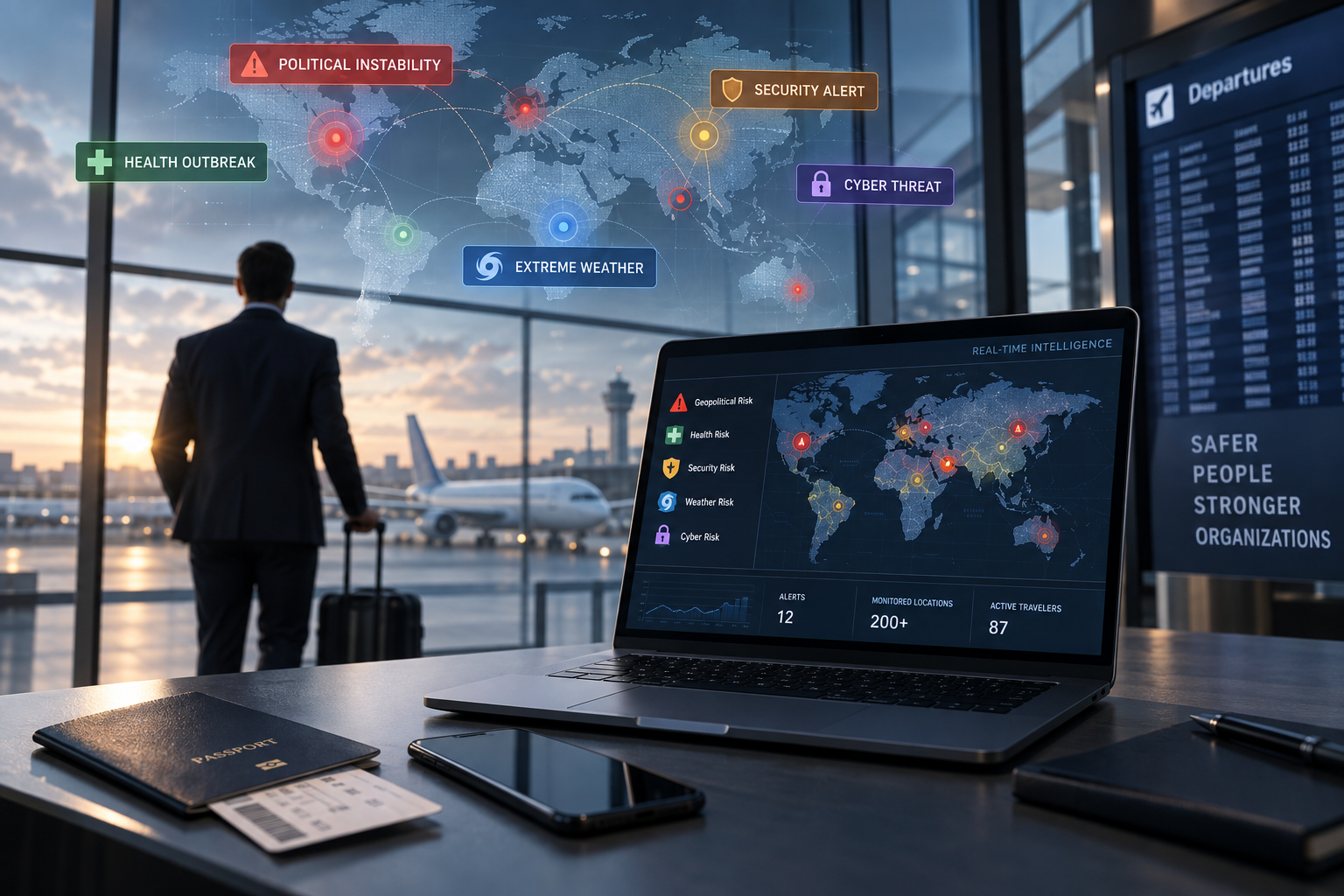
The Krion platform, developed by Kriptia, is an essential resource for integrated risk management. Thanks to its intuitive interface, guided procedures and easily accessible, structured and up-to-date information, it allows real-time risk assessment in the destination country, together with security audit and travel security services.
For companies, agencies, tour operators, managers, diplomats and organisations that send their staff abroad, incidents of this kind are significant and raise a very clear question: are you confident aboutyour information and do you have a reliable Travel Risk plan?
Thanks to Kriptia’s services, you can train and inform your staff in accordance with your Duty of Care, to ensure safe travel and monitor country risks in real time.
If the answer is no, or if you simply want to improve, Kriptia is right for you, ensuringaccountability and prevention.