






















The reflections in this brief contribution aim to outline the highly contemporary topic of the dialogue between risk and the tools of artificial intelligence. In recent years, in both academic and corporate contexts, there has been extensive debate regarding the relationship between risk, society, the economy, and technology. In the following pages, an attempt will be made to define its key elements in order to better grasp the great complexity surrounding the issue of AI.
Introduction
Today, risks surround every member of society, even more so in the corporate and economic spheres. We constantly and daily interact with the most diverse risks: in financial decisions, in the adoption of new technologies, and beyond. Engaging, both privately and publicly, with new technologies undoubtedly offers advantages, but it also exposes individuals and organizations to risks, in the short and long term. In this “new” society and its economic fabric, the prerogatives linked to artificial intelligence and its various applications are no longer optional but necessary.
There are several levels of technological perception in the corporate environment, clearly linked to benefits associated with the company’s mission of creating economic and social value for stakeholders, employees, and the environment in which it operates. However, these levels also increase risk within the sphere of influence, understood as the occurrence of an event and its consequences.
In essence, artificial intelligence and IT tools are essential components in production, monitoring, and management chains, not only in corporate and industrial contexts but also in relation to risk governance itself. At the same time, however, they naturally become risks in themselves, according to the definition just outlined.
The entry of artificial intelligence into corporate processes does not coincide with a simple technological innovation, but rather with a transformation of the company’s decision-making epistemology. In risk governance in particular, AI redefines the relationship between information, forecasting, and responsibility. The growing complexity of operational environments requires tools capable of identifying correlations relevant to specific analyses.
Academic literature has devoted considerable attention to this topic and has emphasized how risk is not merely a probabilistic variable, but also a cultural expression, as highlighted by sociologist Ulrich Beck as early as the 1980s.
Artificial Intelligence and Risk Management
In corporate risk management, artificial intelligence finds application in at least four main areas: predictive analysis, cyber risk, compliance, and so-called reputational risk. In each of these areas, AI does not replace the human decision-maker, but rather extends their capabilities and interacts with interpretative skills, reducing the time between the risk signal and the response, or the proposal put forward to the decision maker.
Effective adoption of AI in the corporate context therefore requires a design phase that precedes the technological outcome itself. Studies on algorithmic governance, for example, have shown that AI must be integrated into a clearly defined system of responsibility. Companies are thus required to establish methods, purposes, and areas of application before even selecting practical and operational models.
With regard to the areas outlined above, without clear boundaries the algorithm operates in a space devoid of orientation, order, and direction, thus dispersing data or, more seriously, producing incorrect results and outputs. Put simply, the quality of the output depends on the definition of the scope, on awareness of the limits and risks of the tool itself, and therefore on the clarity of the inputs. At this stage, the involvement of interdisciplinary expertise is decisive: from risk managers to legal experts, all must contribute to defining objectives in such a way as to shape effective implementation tools.
Data governance is an extremely important aspect, linked to data extraction and structuring, data quality, and consequent security, insofar as AI tools amplify coherence but also potentially errors and distortions.
AI and Geopolitical Risk
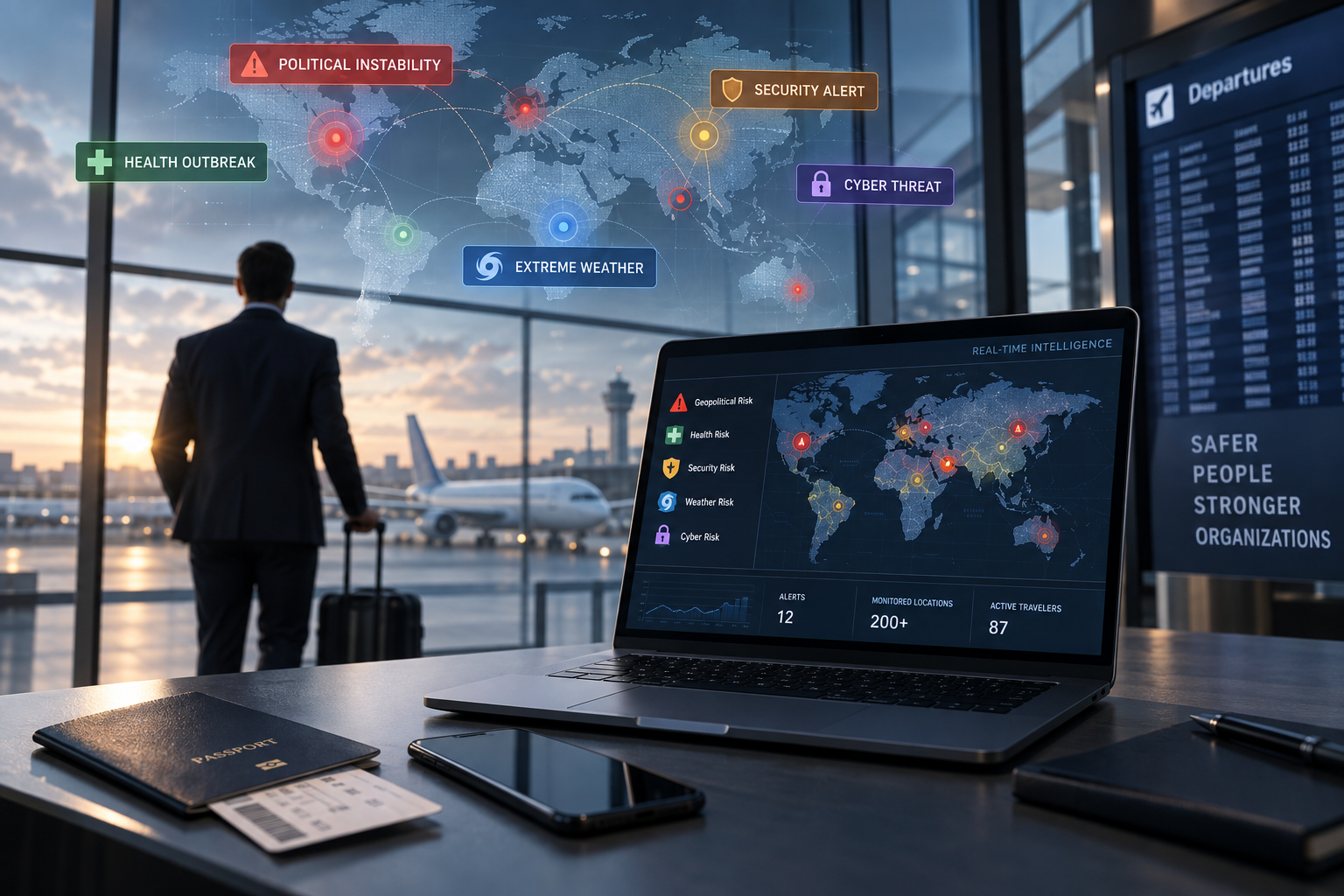
An area of growing interest concerns the application of artificial intelligence to the analysis of geopolitical risk. Through hybrid techniques, including machine learning, companies can monitor open sources, identify signals of political instability, analyze regulatory changes, and anticipate potential disruptions of systemic patterns. The primary benefits lie in the significant reduction of reaction times to critical events.
Geopolitics, however, retains a qualitative dimension that escapes pure statistical correlation. Historical discontinuities—such as wars, revolutions, and systemic crises—do not always emerge in linear or superficial trends. AI can undoubtedly improve time management capabilities and thus the potential to intercept “submerged” anomalies, but interpretation through historical and cultural expertise remains essential. In the field of predictive activities, it should be recalled that probabilistic construction is a process that requires strong interdisciplinary skills.
Organizational Culture and Risk
The introduction of artificial intelligence also modifies and permeates corporate culture. The resulting risk—worth emphasizing in this brief contribution—does not reside in the technology itself, but rather in the possible reduction of the critical capacity of decision-makers. When algorithmic output is perceived as objective and neutral, defining a “status quo,” the interpretative tension that characterizes well-informed human judgment is weakened. In the field of security and its management, this phenomenon takes on strategic importance.
The complexity of geopolitical contexts, the volatility of social dynamics, and the historical and symbolic nature of many conflicts cannot be reduced to mere numerical variables. AI expands the field of observation and helps reduce response times when used appropriately and consciously, but interpretation remains a scientific and cultural act. Alongside the development of tools, the training of management and operators therefore becomes not only necessary, but essential.
A Concluding Prospective Reflection
The expansion of artificial intelligence in the fields of physical and cyber security opens scenarios of profound transformation, in which technological tools, statistical methods, behavioral analysis, and interdisciplinary predictive monitoring coexist. On a cultural level, this evolution has for years raised questions of not only a practical nature, but above all ethical and political ones. Algorithmic security tends to produce environments of apparent control, prompting reflection on the concepts of protection, predictability, and surveillance, in a symbolic evolution of Michel Foucault’s sociological reflections on surveillance and control.
Artificial intelligence, when applied in the context of corporate risk management, represents a substantial structural transformation in the way companies interpret uncertainty and exposure to risk. It enables greater analytical depth, decision-making speed, and predictive capacity, while at the same time introducing vulnerabilities related to management, use, and training, as well as algorithmic “opacity” and limitations. Preparation to adequately address systemic biases should serve as an essential warning regarding corporate use of such implementations, in order to embrace progress as a conscious momentum and potential.
Analyzing contemporary articles and reflections on the subject, it emerges that the challenge is not only technological, but above all cultural and strategic, within a context of synergy and dialogue. It is firmly believed that by integrating identified criticalities and potentialities, a form of uncertainty management can emerge that is capable of interpreting the complexity of the present.
Sources:
https://www.sciencedirect.com/science/article/pii/S0963868724000672
https://www.losguardo.net/wp-content/uploads/2016/11/2016-21-Beck.pdf
Massimiliano Spiga, Ph.D., is an Intelligence Analyst at Kriptia. He also serves as Director of the Scientific and Cultural Committee, as well as Coordinator of the Observatory on Corporate Crime for Kriptia International. His interests, within Kriptia’s cultural and scientific perspective, focus on the balance between historical analysis, contemporary, geopolitical, and strategic reflections, with particular attention to information analysis and management in relation to corporate security dynamics. He is currently also working on the relationship between companies and organized crime, as well as on studies concerning conceptual analogies between ambassadors in the early modern period and the contemporary figure of the manager.