




















Introduction and case for reflection
On the afternoon of Tuesday, September 2, in Marseille, southern France, a Tunisian citizen, recently evicted from his hotel room, returned to the facility armed with knives and an iron bar. Within minutes he injured five people, including the guest who had taken over the room, the hotel manager and his son, a passerby and a customer of a nearby business. The intervention of plainclothes officers ended the attack through the use of lethal force. The attacker was known to the authorities but was not classified as a threat. Furthermore, no elements linked to ideological or religious motives emerged, leaving other speculation open regarding the nature of the attack.
Although not formally attributable to terrorism, this episode highlights significant critical issues in risk management in the hospitality sector. The fact that the attack took place in a public area adjacent to an accommodation facility raises significant questions about safety in hotel contexts and preparedness for low-predictability but high-impact events. It is therefore necessary to reflect on the concept of risk, incident management and applicable mitigation strategies, particularly in the hospitality sector.
In this context, the role of accommodation facilities in preparing a safe environment, capable of anticipating and containing threats, in order to safeguard the health and safety of guests and staff, becomes strategically important.
This article aims, starting from the episode, to analyze in preventive terms possible causes and consequent measures aimed in particular at security managers, hotel managers, guests and staff, business and private travelers.
The phenomenon: violent attacks in urban settings
In recent years there has been a significant increase in knife attacks in public contexts, often characterized by unpredictability of execution and difficulty of prevention. Examples include the attacks in Villach, Austria in February, in Bielefeld, Germany in May, and in Sydney in July. These episodes are part of a broader phenomenon of urban micro-violence which, although not always qualifying as organized crime or terrorism, produces comparable effects in terms of threat perception and consequent impact on security.
The knife, due to its availability, low profile and potentially lethal effect at short range, is a frequent choice in high-density urban contexts and in open-access places. Hotels, stations, airports and semi-public spaces (the so-called “non-places”) are vulnerable environments whose protection is difficult in the absence of structured security systems and adequately trained personnel. The world of hospitality – hotels, resorts, tourist facilities – increasingly faces situations where psychological and social distress, deprivation and mobility converge. In this risky scenario, crime also becomes a symptom and thus a manifestation of systemic and even endemic vulnerability.
Social context and systemic vulnerability
The attack fits into a European context marked by even latent socio-economic tensions, housing insecurity and migration crises. The marginalization of individuals lacking social and psychological support can, in extreme cases, constitute fertile ground for aggressive behaviors not necessarily politicized, but nonetheless destabilizing at a macro-social level. The absence of an ideological motive does not reduce the impact of the event; on the contrary, it underlines the widespread and pervasive nature of risk in apparently neutral contexts. The challenge for security service providers and accommodation facilities is to recognize at an early stage potentially risky individuals and situations, turning a potential threat into a strategic priority, also essential in a list concerning travel security.
Hotel security and open spaces
Security in the hotel sector faces the need to balance hospitality and control, openness and protection. Accommodation facilities, although private spaces, operate in a logic of semi-accessibility that makes them vulnerable. In many cases, staff are not trained to manage deviant and potentially dangerous behavior.
The adoption of security protocols in hotels, such as access control, active surveillance, staff training and others, is still limited, especially in the absence of shared regulatory standards. The Marseille attack highlights the need to redefine the concept of security for accommodation facilities by including more sophisticated risk assessments, also in relation to temporary guests with critical backgrounds. Starting from the critical issues in the hospitality sector, the question to ask is how progress is being made in building operational security policies.
Experiences in the sector and related studies report some urgent issues and reflections.
The absence of security protocols (e.g., anti-terrorism) in a complex period: such measures prove to be a priority, especially in transit areas and in certain geographical areas and cities, commercial, tourist and business hubs.
Furthermore, inadequate access control makes certain spaces even more fragile, together with the lack of staff training.
Risk management: a preventive and reactive approach
The management of violent incidents requires an operational framework that integrates speed of intervention, internal communication, coordination with law enforcement and protection of guests. The concept of incident response in risk management implies a structured approach that goes, as said, beyond mere reaction, even if timely.
For example, an effective incident response should include procedures for:
• Early identification of anomalous situations;
• Activation of internal alarm protocols;
• Communication with competent authorities;
• Management of evacuation and guest safety;
• Post-event psychological support;
Such an approach makes it possible not only to contain the event, but also to mitigate the systemic impact that an attack consequently generates at the operational and reputational level, and on the perception of security, not only at the level of the facility involved, but in general.
Conclusions
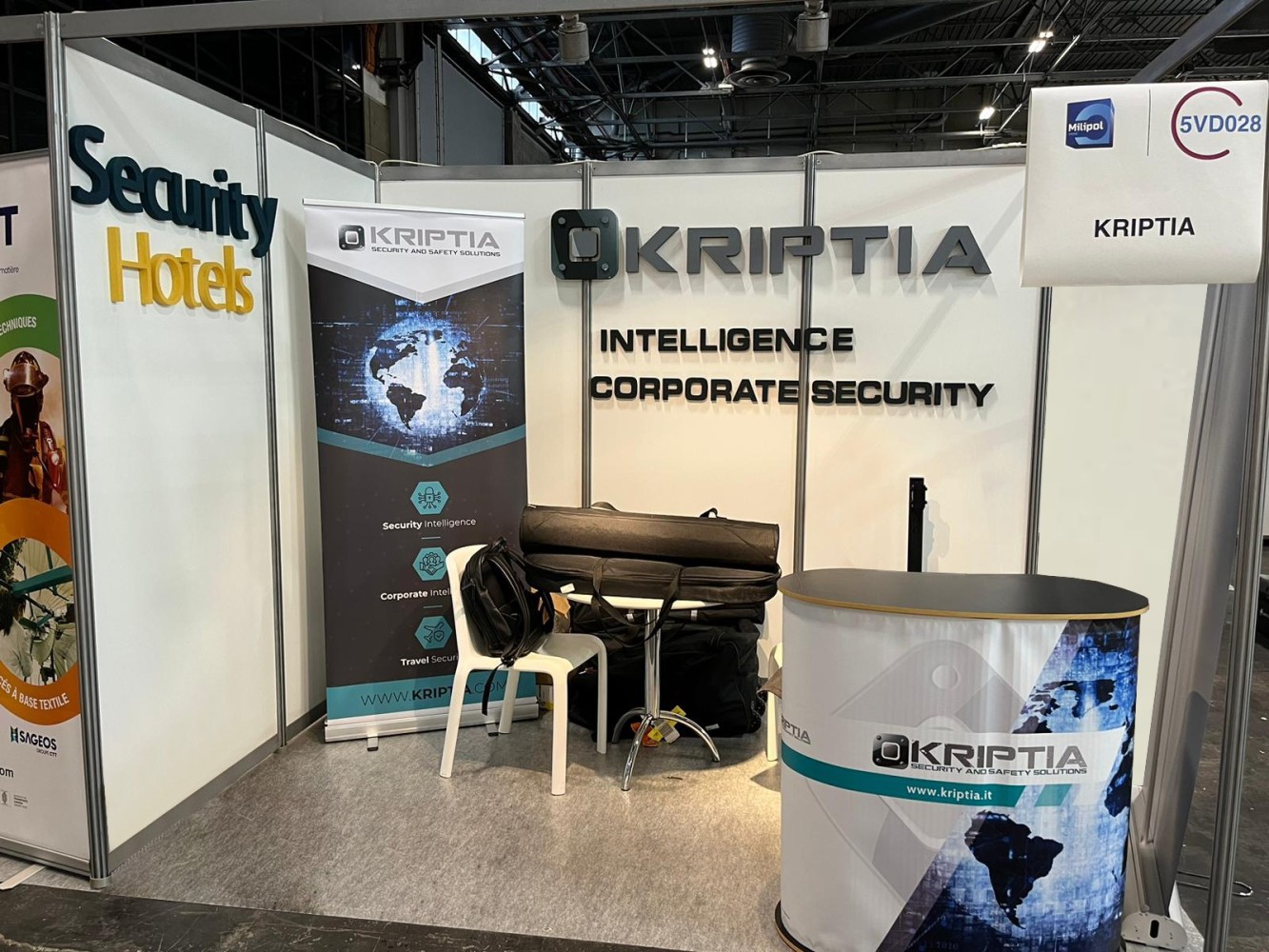
The Marseille attack highlights a growing dynamic of unpredictable threats in sensitive contexts. Security in hotel and urban situations requires a reconfiguration of strategies, moving beyond an exclusively repressive approach. The world of hospitality today appears as a hybrid field, where elements of sociology, behavioral training, mitigation policies, surveillance technologies, and essential services such as Kriptia’s Security Hotels converge.
Within the framework of new challenges in hotel security, Kriptia has promoted and actively promotes the concept of safe and protected environments through Security Hotels, that is, accommodation facilities designed or reconfigured according to advanced criteria of physical protection, passive surveillance and rapid incident response. This model integrates risk management and mitigation protocols, specific training for staff, and the adoption of predictive technologies for analysis.
In a world where individual mobility is increasing, the challenge ultimately lies in protecting without distorting, anticipating and predicting where possible without alarming, in building security as a shared social culture, rather than as a mere passive response to events.
Sources consulted:
https://www.lapresse.it/esteri/2025/09/02/francia-accoltella-diverse-persone-in-hotel-a-marsiglia-ucciso-da-polizia/
https://www.reuters.com/world/tunisian-stabs-five-marseille-then-shot-dead-by-french-police-2025-09-02/
https://www.bfmtv.com/marseille/info-bfmtv-un-homme-mortellement-touche-par-des-tirs-de-policiers-apres-avoir-poignarde-plusieurs-personnes-dans-un-hotel-a-marseille_AN-202509020628.html?utm_source
https://www.repubblica.it/esteri/2025/09/02/video/marsiglia_assalitore_ucciso_polizia-424821941/
https://europa.today.it/attualita/chi-e-aggressore-marsiglia.html
https://securityanddefence.pl/pdf-115539-45172?filename=45172.pdf