



















1. Introduction: A Brief Historical and Political Overview for the Present
Nepal, nestled between the high mountains of China and Tibet to the north and India to the south, has long been affected by internal political tensions stemming from ethnic conflicts, party fragmentation, social and economic inequalities, and weak governance, often accused of corruption and negligence. After centuries of monarchy, in 2008 Nepal became a federal republic, but the transition did not eliminate latent crises: government fluctuations, frequent protests, scandals, and popular demands for transparency have intertwined over the past twenty years with complex international dynamics, including relations with India and China, a form of popular diaspora, challenging tourism management, and the long-standing issue of Tibetan refugees.

Nepal and its Borders [1]
1.1. Current Affairs: Protests, Unrest, and Risks for Travelers
In very recent times, a new wave of unrest has emerged in the capital Kathmandu and in some urbanized areas of Nepal, triggered by anti-government protests and the spread of dissatisfaction against perceived corruption, social restrictions such as the forced shutdown of some social media, and demands from younger generations for concrete social and political reforms.
2. The Hilton Case in Kathmandu: A Luxury Hotel in Flames
Among the symbolic sites involved in the protests and unrest was the Hilton Hotel Kathmandu, a 5-star hotel inaugurated in 2024, considered the most luxurious accommodation in the city, partly due to its proximity to strategic areas. During recent clashes, the Hilton was targeted and largely destroyed by arson attacks. This represents not only an economic loss with repercussions on tourism but also holds strong symbolic value. An international-level hotel was attacked as it was perceived to be linked to political elites—hosting clients from political, power, and economic circles—representing power, progress, and globalization in a tense situation where protests were demanding institutional change and upheaval.
3. The Italian Family in Nepal: An Example of Real Travel Risk
Shortly after the outbreak of violence, the case of the Italian family from Parma—father, daughter, and grandparents—on a solidarity mission in Nepal, emerged as an example of how operational risks can become a matter of life or death.
Key points of the case, essential for structuring a specific risk management plan, are:
- The family was in Nepal on a solidarity mission, specifically to assist a school for Tibetan orphans;
- They were staying at the Hyatt Regency Hotel when the unrest peaked in the area, resulting in clashes, the closure of the local airport, and a fire within the hotel;
- The family was forced to protect themselves promptly but improvisationally, isolating themselves from the dangers of smoke and fire until aided by local citizens;
- During the fire and subsequent escape from the building, the family sustained various injuries;
- Later, they discovered that their travel insurance did not cover events related to socio-political unrest and internal conflicts.
This event, in a specific travel security and hotel security context, demonstrates the direct and consequential link between personal safety measures, the choices made by hotels and local authorities, and diplomatic/consular support.
4. Duty of Care, Hotel Security, and Travel Security: Basic Principles and Operational Guidelines
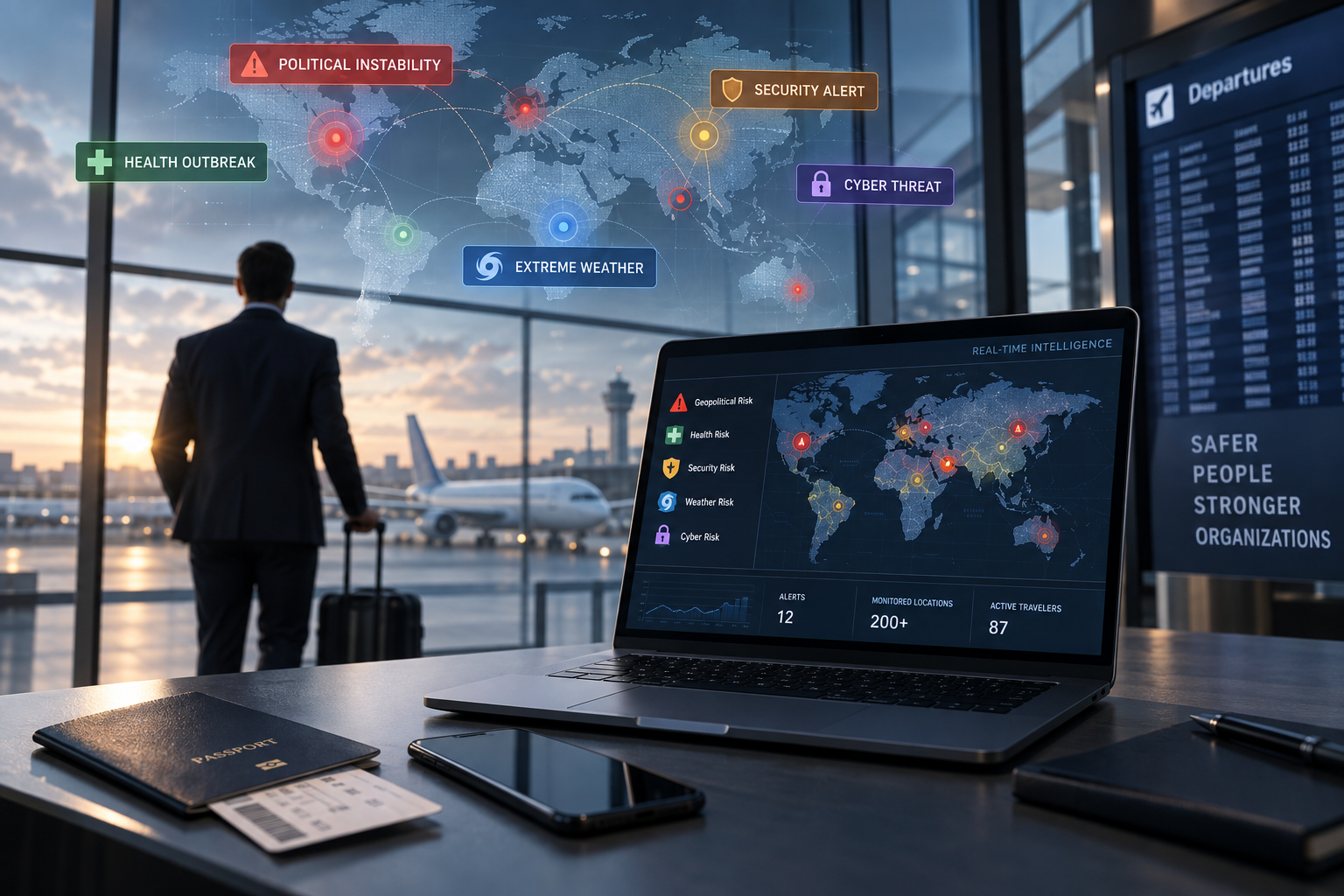
In light of these recent events, for those operating in unstable contexts such as Nepal, it is crucial to implement a robust Travel Risk Management policy, which involves:
- Preventive and proactive risk assessment: a geopolitical analysis, review of protest history, political and social conditions, potential for civil unrest, fires, and attacks on public or semi-public structures such as hotels.
- Careful accommodation selection, ensuring the hotel has adequate safety standards: escape routes, emergency exits, fire- and earthquake-resistant structures, smoke control systems, fire extinguishers, fire doors, and similar equipment. It is also necessary to confirm that the facility has an emergency plan and protocol known to staff and guests. Proximity to safe locations, reliable infrastructure (such as hospitals and embassies), and road access is of great importance. Furthermore, hotels must be able to communicate promptly during crises through alerts, internal alarms, multilingual staff, and communication channels.
- Travel planning and communication, including registration with one’s embassy/consulate or through platforms such as dovesiamonelmondo.it. Constantly informing family members or affiliated institutions (company, NGO) about the updated itinerary, hotels, and emergency contacts must be a priority. Travel planning should also include monitoring local safety updates via media, government sources, intelligence reports, and international travel advisories. In this regard, Kriptia constantly monitors countries, risks, and emergency news and offers specific services in travel risk treatment and behavioral/security protocols.
- Evacuation and contingency procedures are necessary, within the limits of what can be anticipated, to ensure at least a prompt reaction in emergencies.
- Finally, the case of the Parma family highlighted the absolute necessity of verifying insurance coverage in advance—or integrating it if needed—thus avoiding situations where political risks are excluded.
5. Conclusions: Kriptia’s Services, Security, and Hotels
The events in Nepal, from different perspectives, have recently shown that in a fragile geopolitical context marked by internal unrest, traveler safety can never be taken for granted. Not even high-level accommodations guarantee immunity from risks. They can instead become symbolic protest targets or locations where emergency response measures, such as fire protection and evacuation, prove dangerously inadequate. Similarly, the experience of the Italian family shows that improvisation, lack of adequate insurance, and the absence of emergency protocols seriously endanger lives.
For this reason, Kriptia offers its operational method based on three essential pillars:
- Travel security advisory through predictive and preventive risk analysis, updated assessments, and tailored consultancy;
- Hotel Security, with audits dedicated to the safety of hospitality structures, focusing on fire systems, escape routes, construction standards, and internal crisis procedures;
- Duty of Care solutions, providing constant support to companies, universities, institutions, and organizations in fulfilling their moral and legal obligations to protect their operators and travelers, offering essential checklists, training, and continuous monitoring services.
In a world where security threats are increasingly asymmetric and sudden, Kriptia positions itself with its specialists as a strategic partner to reduce vulnerabilities and ensure that travelers can rely on a concrete, operational, and context-adapted safety network. Travel security must never be optional but should instead represent an investment.
Sources consulted:
- https://it.euronews.com/2025/09/10/nepal-lesercito-impone-il-coprifuoco-dopo-le-rivolte-dei-giovani
- https://tg.la7.it/esteri/proteste-nepal-kathmandu-incendio-hotel-hilton-10-09-2025-243986
- https://www.ansa.it/sito/notizie/mondo/mediooriente/2025/09/11/caos-in-nepal-famiglia-di-parma-sopravvive-a-rogo-hotel-_2cf3cf93-7538-4a9b-add1-fedfeb52bc1c.html
- https://aninews.in/videos/world/nepal-protest-kathmandus-hilton-hotel-charred-as-anti-corruption-protestors-set-it-on-fire/
- https://www.tgcom24.mediaset.it/mondo/nepal-rivolta-famiglia-italiani-salva_103326999-202502k.shtml
- https://www.ispionline.it/sites/default/files/pubblicazioni/Garzilli.pdf
- https://www.limesonline.com/rivista/nepal-l-agonia-dell-ancien-regime-14610718/
[1] (Image source: Wikimedia Commons – CIA map of borders of Nepal, 1965, https://www.loc.gov/resource/g7821f.ct002819/?r=-0.578,0,2.155,0.759,0)
Central Intelligence Agency, Map of borders of Nepal, 1965. Library of Congress. Public domain (U.S. Government work).
